In High-Performance Computing (HPC) and industrial applications, the PCIe Riser Cable is critical for connecting GPUs and RAID cards. As PCIe 5.0 pushes transfer rates to 32GT/s, maintaining Signal Integrity (SI) has become the biggest challenge for cable manufacturers.
1. Why Does Your GPU Drop Performance?
Many engineers encounter "Blue Screens of Death" (BSOD) or forced PCIe downgrade (e.g., running at 3.0 instead of 4.0) when using extension cables. This is primarily caused by:
- Insertion Loss: As signal frequency increases, attenuation grows significantly over distance. Standard copper cables simply cannot sustain high-frequency signals over long lengths.
- Impedance Mismatch: PCIe standards require a differential impedance of 85Ω (±15%). Poor manufacturing leads to signal reflection, creating data errors and latency.
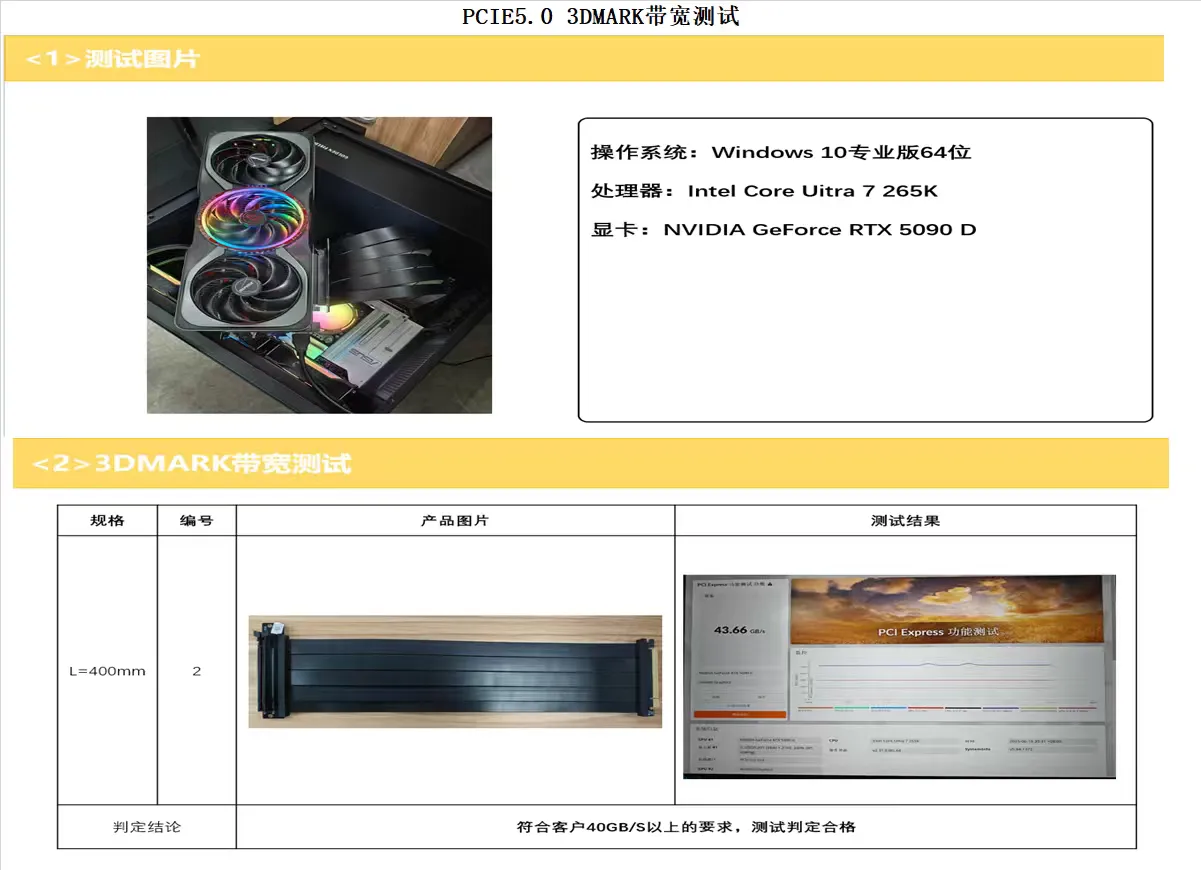
2. The YZMU Solution
To ensure industrial-grade stability, YZMU Tech implements server-grade manufacturing processes:
- Silver-Plated Copper (30AWG): We use silver-plated cores to leverage the "Skin Effect," significantly reducing resistance for high-frequency signals compared to standard tin-plated copper.
- EMI Shielding: Our cables feature a dual-layer design with Aluminum Foil and Conductive Mylar. Each differential pair is individually shielded to prevent electromagnetic interference within the chassis.
- Automated Soldering: High-precision UV curing and automated soldering ensure durable joints, tested 100% for continuity and impedance.
3. Selection Guide for Engineers
When sourcing PCIe 4.0/5.0 riser cables, we recommend:
- Keep it Short: Minimizing cable length is the best way to preserve signal quality. We recommend lengths between 5cm and 30cm for optimal performance.
- Bend Radius: While YZMU cables are flexible, avoid sharp 90-degree bends immediately at the soldering point (connector head) to prevent stress damage.
Looking for Custom PCIe Cabling?
YZMU Tech offers OEM/ODM services for PCIe 5.0, Oculink, and SlimSAS assemblies. Contact us for samples and technical support.
Contact Us