With the explosive growth of artificial intelligence and big data applications, bandwidth demands in data centers are rising exponentially. PCIe 6.0, as the next-generation interconnect standard following PCIe 5.0, is becoming the critical technological foundation supporting data infrastructure for the next decade. Compared to the previous generation, PCIe 6.0 achieves qualitative leaps in performance, energy efficiency, and architectural flexibility.
1. Core Technical Breakthroughs of PCIe 6.0
The PCIe 6.0 standard's core lies in its groundbreaking technological innovations, primarily including:
- Doubled Speed to 64 GT/s: By adopting PAM-4 encoding scheme (Pulse Amplitude Modulation), PCIe 6.0 increases single-lane speed from PCIe 5.0's 32 GT/s to 64 GT/s, doubling bandwidth capacity.
- FLIT Mode Transmission: Introduces Flow Control Unit mechanism, splitting data packets into fixed-length FLITs for transmission, significantly improving efficiency and reliability.
- Forward Error Correction (FEC): Integrates LDPC (Low-Density Parity-Check) forward error correction to compensate for signal loss in high-speed transmission and extend reach.
- Lower Power Consumption: Optimized coding efficiency and power management reduce power consumption by approximately 30% compared to PCIe 5.0 at equivalent performance.
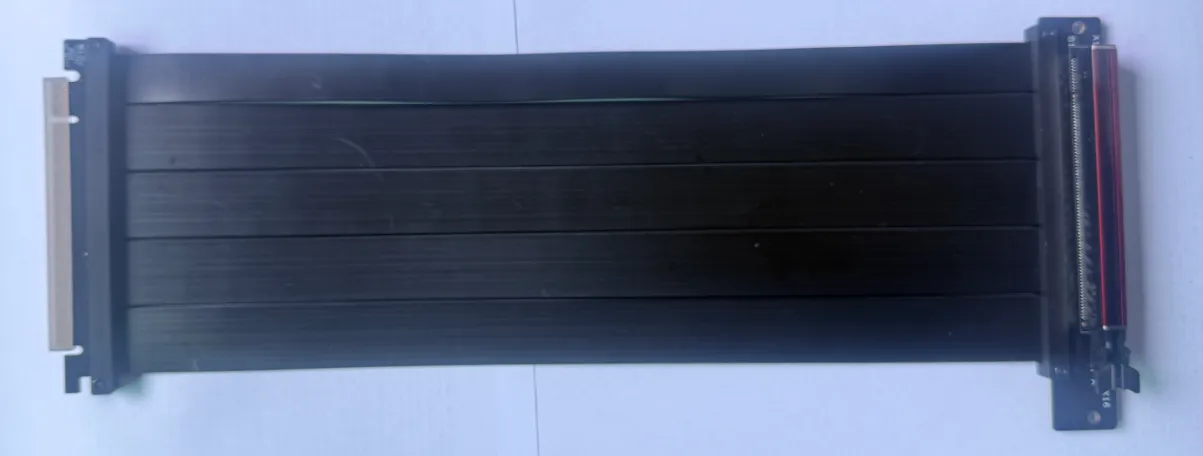
2. Profound Impact on AI Data Centers
The introduction of PCIe 6.0 coincides with the critical moment of exploding AI computing demands, with far-reaching implications for data center architecture:
- GPU Cluster Interconnect: Higher bandwidth enables more efficient data exchange between GPUs, significantly reducing training time for large language models.
- Memory Pooling Acceleration: Combined with CXL 3.0 protocol, PCIe 6.0 supports more efficient memory pooling, improving resource utilization.
- Storage Performance Leap: Next-generation NVMe 5.0 SSDs will fully utilize PCIe 6.0 bandwidth, with single-drive throughput expected to exceed 32 GB/s.
- Edge Computing Enablement: Lower latency and power consumption make PCIe 6.0 ideal for edge AI inference scenarios.
3. New Challenges in High-Speed Cable Design
PCIe 6.0 also brings new technical challenges for high-speed interconnect components:
- Higher Signal Integrity Requirements: At 64 GT/s, margins for insertion loss, crosstalk, and jitter are significantly tightened, demanding higher standards for cable materials and manufacturing processes.
- Material Innovation Imperative: Traditional copper cables face physical limits, with optical interconnect solutions becoming important for long-distance applications.
- Thermal Management Pressure: Higher data transmission density requires more efficient thermal dissipation solutions.
4. YZMU's Technology Roadmap
As a leading enterprise in high-speed interconnects, YZMU has proactively invested in PCIe 6.0 technology development:
- Material Development: Developing next-generation low-loss silver-plated copper cables and high-frequency PCB materials.
- Process Optimization: Introducing high-precision automated production equipment to ensure impedance control within 85Ω ±5%.
- Testing & Validation: Establishing comprehensive PCIe 6.0 signal integrity testing platform with full quality assurance.
Ready for PCIe 6.0 Era?
YZMU offers comprehensive high-speed interconnect solutions from PCIe 4.0/5.0 to PCIe 6.0. Our engineering team can help evaluate your system upgrade path and ensure smooth transition to next-generation technology.
Contact Technical Advisor